Taking small steps every day is one of the most reliable ways to create big changes. This guide shows why tiny actions compound and how to use them in every area of life.
Table of Contents
Small, consistent actions can transform your health, personal growth, relationships, and career over time. By adopting simple yet effective habits, you can create lasting positive changes in your life. Here’s how small steps can lead to big transformations.

1. Health: Small Changes, Big Results
Taking care of your health doesn’t require drastic measures. Here are some easy steps to begin:
- Swap sugary drinks for water: A single change in your diet can improve energy levels and reduce calories.
- Commit to a 10-minute walk daily: Short, consistent activity improves cardiovascular health and boosts your mood.
- Benefit from the compounding effect: Over time, small health habits lead to better fitness, weight management, and mental clarity.
2. Personal Growth: Elevate Your Mindset
Simple habits can help you grow mentally and emotionally.
- Read one page daily: You can finish several books in a year with this small commitment.
- Practice gratitude: Write three things you’re grateful for each day to cultivate positivity and a growth mindset.
- Learn a new skill: Dedicate 10 minutes daily to acquiring knowledge or practicing a skill. Consistency will build expertise.
3. Relationships: Build Stronger Connections
Strengthen your relationships with small, thoughtful gestures.
- Send a quick message: Reconnect with loved ones through a “thinking of you” text or call.
- Listen actively: Dedicate time to fully listening during one conversation each day, free of distractions.
- Celebrate small joys: Acknowledge shared laughter or kind gestures to nurture bonds.
4. Career: Achieve Big Goals with Small Steps
Advance your career by focusing on manageable daily actions.
- Start your day with one task: Completing a small task early boosts motivation and sets a productive tone.
- Network intentionally: Connect with one new person weekly to steadily grow your professional network.
- Seek growth opportunities: Attend webinars, read industry blogs, or complete online courses to upskill over time.
Practical Tips to Embrace the Small-Steps Approach
To ensure success, integrate these strategies into your routine:
- Set SMART Goals: Break big goals into Specific, Measurable, Achievable, Relevant, and Time-bound steps.
- Celebrate Progress: Acknowledge small wins to stay motivated. Progress matters more than perfection.
- Focus on Daily Habits: Use a checklist to ensure consistency in daily actions that align with your goals.
- Be Patient: Remember, slow and steady progress leads to long-term success.
- Track Your Progress: Use habit trackers, apps, or journals to monitor milestones and stay committed.
Real-Life Success Stories
- James Clear – Author of Atomic Habits
Clear’s philosophy focuses on how “tiny changes” create remarkable results. He shares examples of athletes and entrepreneurs who achieved greatness through consistent small actions. - The Weight Loss Journey
Countless people have achieved weight loss by making minor changes like taking the stairs, drinking more water, or eating one healthy meal a day. - Elon Musk’s Productivity Model
Elon Musk often emphasizes breaking large projects into smaller, actionable steps to accomplish seemingly impossible goals.
Conclusion: Start Small for Big Success
The proverb “Rome wasn’t built in a day” highlights the power of small steps. Each great achievement results from deliberate, consistent actions over time.
By starting small and staying consistent, you can achieve incredible transformations in your life. Remember, the journey of a thousand miles begins with a single step. Take your first step today and witness the power of small actions leading to big changes.
Why Small Steps Work: The Power of Compounding
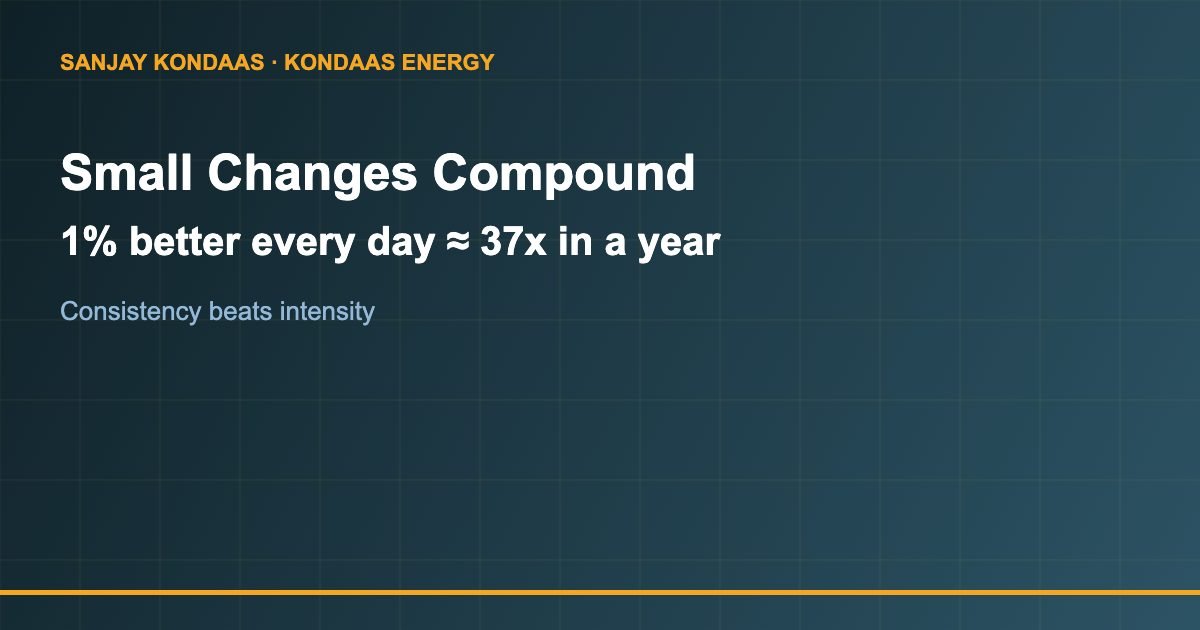
A tiny improvement repeated consistently adds up. If you became just 1% better each day for a year, the compounding effect would be roughly 37 times better by the end — a simple way to picture how small changes grow. The same principle works in reverse: small bad habits quietly add up too.
Small steps also reduce fear. A huge goal can feel overwhelming, but a five-minute action feels manageable. Once you start, momentum makes the next step easier.
7 Powerful Ways to Use Small Steps
1. Make the First Step Ridiculously Easy
Want to exercise? Start with putting on your walking shoes. Want to read more? Read one page. The goal is to build the habit of showing up.
2. Stack New Habits on Old Ones
Attach small changes to routines you already have: stretch after brushing your teeth, or write one line in a journal after dinner.
3. Focus on One Area at a Time
Changing health, finances and career all at once spreads energy thin. Pick one area and let early wins build confidence.
4. Track Progress Visibly
A wall calendar with ticks or a simple app keeps small steps visible and motivating.
5. Increase Gradually
Once a habit feels automatic, add a little more — two pages instead of one, fifteen minutes instead of ten.
6. Celebrate Small Wins
Acknowledging progress, however small, reinforces the behaviour and keeps motivation high.
7. Be Patient With the Process
Big changes often become visible only after weeks or months. Trust the process and keep going.
A Simple 30-Day Small Steps Plan
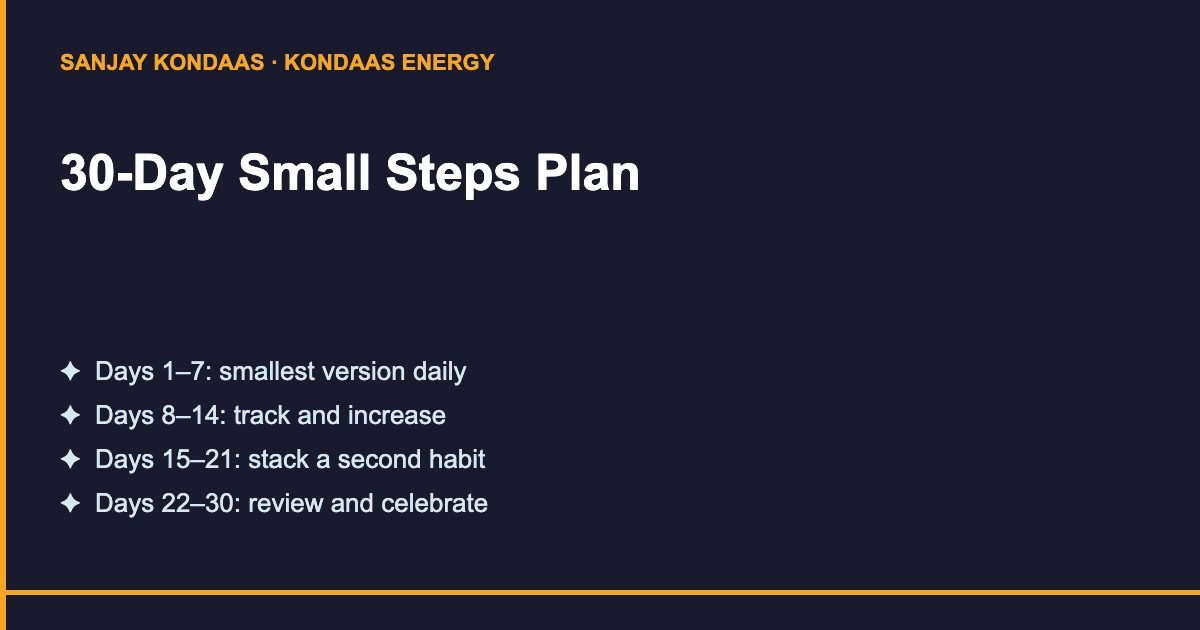
- Days 1–7: choose one habit and do the smallest version daily.
- Days 8–14: add a tracker and slightly increase the effort.
- Days 15–21: stack a second small habit onto the first.
- Days 22–30: review progress, celebrate and plan the next step.
Small Steps in Business
Businesses grow the same way. Many lasting companies started small and expanded one milestone at a time — the Kondaas group, for example, began in Coimbatore in 1995 with ₹10,000 and added new businesses step by step over three decades. Read 7 milestones that matter and 10 daily habits for a happy and healthy life.
Research on habit formation from University College London, reported widely including by the NHS Live Well programme, highlights that repeating simple actions in a consistent context helps them become automatic.
FAQs on Small Steps
Do small steps really make a difference? Yes. Consistent small actions compound over time and are easier to maintain than dramatic changes.
How small should my first step be? Small enough that you can do it even on your busiest or most tired day.
What if I miss a day? Restart the next day. Consistency over weeks matters more than perfection.