Most solar system failures can be prevented. Based on Kondaas’ experience upgrading 11,401 rooftops, this guide explains why systems underperform and what owners can do about it.
Table of Contents
Introduction
Why Do Solar Systems Fail?
After servicing 11,401 rooftops in Tamil Nadu, we found solar failure is rarely bad luck. The 5 main reasons are: 1) Poor installation & design, 2) Inverter failures, 3) Shading & dust on panels, 4) Weak cables, connectors & structure, 5) No preventive maintenance. Fixing these can restore 20-30% generation and extend life to 25+ years.
Installing solar panels alone does not guarantee a lower TNEB bill. In 2026, many homes and businesses in Coimbatore have rooftop solar but still face low generation, frequent inverter tripping, and rising power costs.Why? A solar system is more than panels. It fails when installation is poor, the wrong inverter is selected, panels are shaded, or maintenance is ignored.After auditing 11,401 rooftops across Tamil Nadu, we identified the exact pattern of failure. This guide shows you the 5 failure points and how to fix them.
Why Do Solar Power Systems Fail?
A solar plant has 6 critical parts: solar panels, solar inverter, mounting structure, DC & AC cables, connectors, and safety devices like isolators and earthing.Failure in any one part impacts the entire system.Common root causes we found:Low-quality or incompatible componentsWrong system sizing and design. Environmental issues: shading, dust, heat, rainElectrical faults: loose wiring, moisture in isolators, voltage fluctuation. No regular monitoring or service. Aging inverters beyond 10-12 years.
Key Insight from 11,401 Audits: 90% of failures are due to avoidable installation errors, not panel quality.
Over time, significant generation loss can be avoided by addressing rooftop solar problems early on, such as hot spots, inverter error codes, or microcracks.
The Top 5 Ways Rooftop Solar Systems Fail
1. Poor System Design and Installation – The Biggest Failure (40%) This is the #1 reason for underperformance. Many installers don’t calculate daily load, roof orientation, tilt angle, and structure strength. Wrong cable routing, incorrect panel direction (not true South), weak structure, and mismatched inverter capacity reduce output and create safety risks.
How to Avoid It:
Before installation, insist your solar company checks:
Your last 6 months TNEB bill – daily and monthly units. Available shadow-free rooftop area. Correct tilt (10-13° for Coimbatore) and South-facing orientation. Roof load capacity and wind load. Correct inverter capacity and dual MPPT for multiple orientations. Proper cable size, earthing, and lightning protection.
Inverter Failures and Electrical Issues
The inverter is the brain of your solar system. It converts DC from panels to AC for home use. When it fails, your entire generation stops. We found overheating, wrong settings, loose DC connections, and TNEB voltage spikes as the main reasons for inverter failure.
Red Flags of Inverter Failure:
Inverter shuts down daily between 11am – 2pm (overheating). Repeated fault codes or error 02, 03, 14. Sudden drop from 15 units to 5 units per day. Hot body or buzzing sound from inverter. Monitoring app offline or not updating.
How to Avoid It:
Choose a Tier-1 inverter with proper sizing, ensure good ventilation, use correct DC breaker ratings, and act on app alerts immediately. If your string inverter is 10+ years old, upgrade to a Smart Deye Hybrid Inverter with advanced protection and battery backup.
- Shading, Dirt and Dust on Solar Panels Solar needs direct sunlight. A small shadow from a water tank, parapet wall, tree, or nearby building can cut generation drastically. In a standard string system, shading on 1 panel reduces output of the entire string by 30-50%.
In Coimbatore, dust, bird droppings, and pollen also block sunlight.
How to Avoid It:
Do a full shadow analysis with Solar Pathfinder or drone before install
. Keep panels clean every 15-20 days.
Trim trees that cast shadows between 9am – 4pm.
Check for new construction around your building every 6 months. Use micro-inverters or Deye Hybrid with dual MPPT if you have partial shading.
- Cable, Connector and Mounting Structure Failures Power flows from panels to inverter through DC cables and MC4 connectors. Poor-quality cables, loose joints, water entry in connectors, and rusted structures cause energy loss and safety hazards like fire.
Common Issues We Found in Audits:
Loose MC4 connectors causing sparkingUndersized cables (2.5 sqmm used instead of 4 sqmm). Damaged insulation due to rats or sun exposure. Water or moisture inside isolator switches. Loose or corroded mounting bolts.
How to Avoid It:
Always use 4 sqmm UV-protected DC cables, original MC4 connectors, and hot-dip galvanized structures with proper earthing. Demand a quality checklist from your installer and do a thermal scan every year.
- No Regular Maintenance and Monitoring
A solar system is not a fit-and-forget product. Without cleaning and monitoring, small faults become big failures.Preventive Maintenance Schedule We Recommend:Daily: Check generation on app – should be 4+ units per kW in CoimbatoreMonthly: Clean panels with water, check for visible damageHalf-Yearly: Full service – check cables, connectors, structure tightness, inverter logs, and earthingThis one step can prevent 25% generation loss annually.
How to Identify If Your Solar System is Failing?
Don’t wait for total shutdown. Look for these early warning signs:
Sudden drop in daily units generation. TNEB bill rising despite solar. Inverter showing red light or error codes daily. Visible cracks, hot spots, or brown patches on panels. Loose, burnt, or hanging cablesInverter body is very hot to touch. Monitoring app shows flat graph on sunny days. If you see any of these, call a certified solar technician in Coimbatore for an audit. Don’t try electrical repairs yourself.
Over the course of the system’s lifetime, factors such as harsh weather, UV exposure, and thermal stress increase the solar panel degradation, resulting in decreased energy yields.
How to Build a Reliable, 25-Year Solar System?
Based on 11,401 rooftop learnings:
1. Choose Quality: Tier-1 590W+ panels, Deye / Growatt / Solis inverters, and GI structure.
2. Expert Installation: Demand shadow analysis, structure drawing, and SLD.
3. Monitor Daily: Use Wi-Fi monitoring. If generation is low, act the same day.
4. Maintain Regularly: Clean and service as per schedule.
5. Fix Errors Fast: An early alert saves ₹20,000+ in repair costs.
Conclusion
Failure is Predictable and Preventable. Solar systems are designed to last 25 years, but installation mistakes, inverter issues, shading, cable faults, and poor maintenance cut that life short.Our data from 11,401 upgrades is clear:
Solar failure is not bad luck. It is caused by predictable, avoidable errors — cutting corners during installation and delaying upgrades. A well-designed and maintained system gives you:Stable daily generation for 25 years. No unexpected shutdowns. Better safety and structure strength. Higher ROI and faster paybackLower dependency on TNEB grid. If your generation is low, get a professional rooftop audit today and protect your investment.
Solar failure can be prevented, so it’s not bad luck. One pattern emerged after 11,401 rooftops in Tamil Nadu were audited and upgraded: malfunctioning solar panels are not the cause of solar system failures. They fail due to poor installation, poor design, and inadequate maintenance. Every problem we saw was foreseeable and avoidable, ranging from unsecured DC wiring and undersized connections to incorrect inverter selection, partial shade, dust accumulation, and a lack of monitoring.Without routine maintenance, a typical string inverter system will gradually lose 2030% of its generation and eventually shut down entirely after ten to twelve years.
Frequently Asked Question
1. What is the #1 reason solar systems fail in Coimbatore?
After auditing 11,401 rooftops, poor installation and wiring is the #1 reason. Loose DC connections, undersized cables, and weak mounting structures cause 40% of generation loss and inverter tripping in Coimbatore.
2. Can shading reduce my solar power by 50%?
Yes. In a string inverter system, even 10% shade on one panel can reduce the entire string’s output by 30-50%. We recommend a detailed shadow analysis and using Deye Hybrid inverters with dual MPPT to minimize shading loss.
A Preventive Checklist to Avoid Solar System Failures
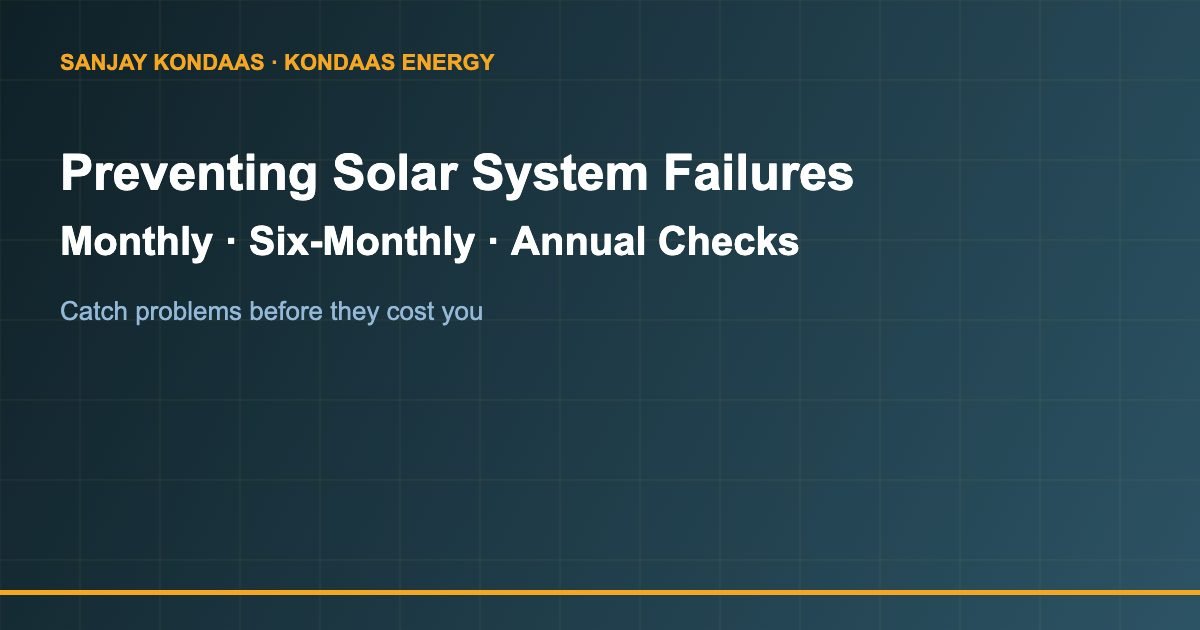
Knowing the causes is only half the job. The other half is a simple routine that catches problems early. Use this checklist to keep your rooftop system generating at its best for decades.
Monthly: Check Generation
Compare your monthly solar generation with the same month last year and with your installer’s expected figures. A steady drop that is not explained by weather is one of the earliest signs of solar system failures such as inverter faults, loose connections or heavy soiling.
Every Few Weeks: Keep Panels Clean
Dust, bird droppings and leaves reduce output, especially in dry months. Clean panels with plain water and a soft brush, early in the morning or evening when they are cool. Avoid harsh detergents and never walk on the modules.
Every Six Months: Inspect Cables and Structure
Look for cracked cable insulation, loose connectors, corrosion on mounting structures and signs of water pooling. Heat, monsoon rain and coastal air in Tamil Nadu can speed up wear on low-quality components.
Every Year: Professional Health Check
A qualified technician can test string voltages, check earthing and lightning protection, review inverter error logs and use tools such as thermal imaging to find hot spots. An annual check is the most reliable way to prevent small issues from turning into costly solar system failures.
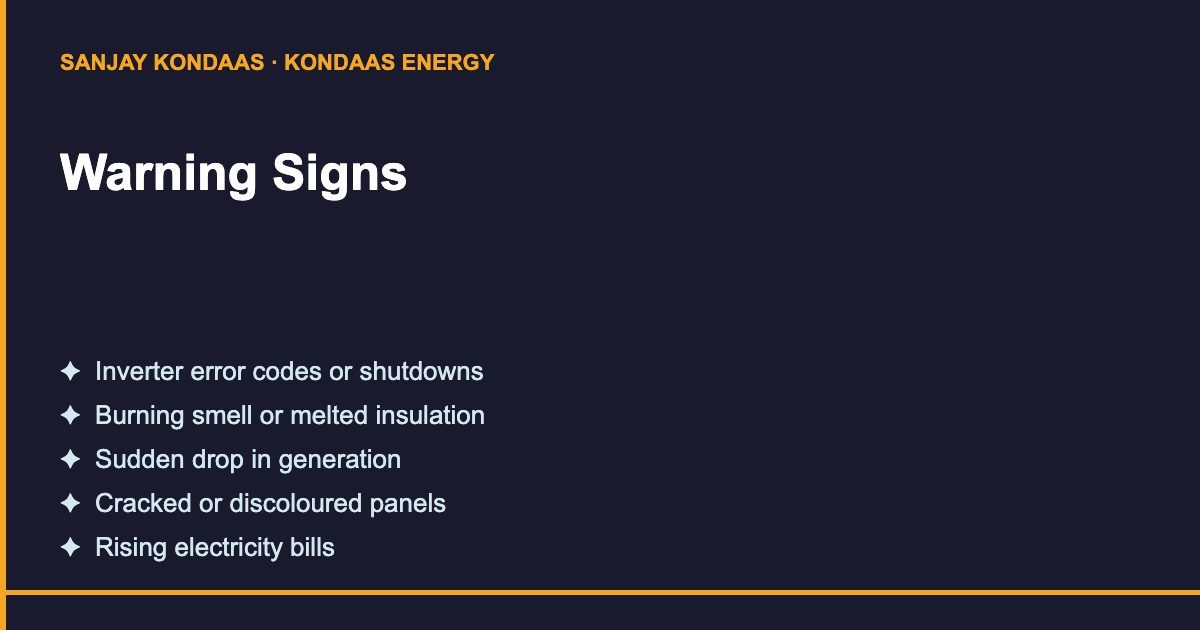
Warning Signs That Need Immediate Attention
- Inverter error codes or frequent shutdowns during sunny hours.
- Burning smell, discoloured connectors or melted cable insulation.
- Sudden drop in generation not linked to cloudy weather.
- Cracked, delaminated or discoloured panels.
- Electricity bills rising even though the solar system appears to be working.
If you notice any of these, switch off the system safely using the isolators and contact your installer. Do not open the inverter or handle DC cables yourself — they can carry dangerous voltages even when the grid is off.
Choosing Components and Installers That Last
Many solar system failures begin on installation day. Choose panels from the MNRE’s Approved List of Models and Manufacturers (ALMM), inverters with local service support and installers who provide proper earthing, surge protection and cable management. For more guidance, read our comparison of string inverter vs hybrid inverter and the latest DCR and ALMM rules.
FAQs on Solar System Failures
What is the most common cause of solar system failures? Poor installation and design are among the most common causes, followed by inverter problems, shading and dust, weak cables and connectors, and lack of maintenance.
How often should I service my rooftop solar system? Clean panels regularly, inspect cables and structure every six months and arrange a professional health check at least once a year.
Can an underperforming solar system be fixed? Yes. Many issues — such as faulty connectors, poor cable routing or a failing inverter — can be corrected through an audit and targeted upgrades.
Who can audit my system in Coimbatore? Kondaas, founded by Sanjay Kondaas, audits and upgrades rooftop solar systems across Tamil Nadu and Kerala.
One thought on “We Upgraded 11,401 Rooftops—Here Are the Top 5 Ways Systems Fail”