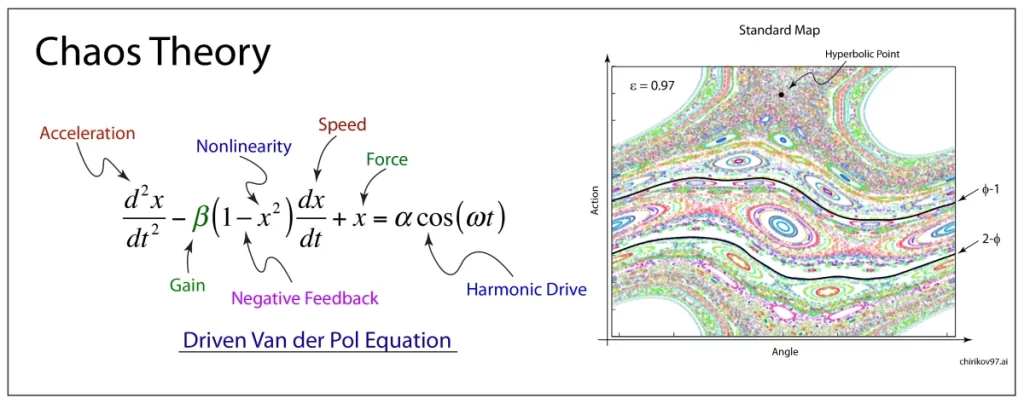
Chaos is a missing system — when the same problem keeps coming back, the issue is usually not people but the absence of a clear process. This idea sits at the heart of how Sanjay Kondaas builds scalable businesses.
Table of Contents
Introduction
Business success comes from processes, not from chaos. Sanjay Kondaas is adamant that the lack of a defined structure, procedure, and direction is what many corporations refer to as “chaos.” His strategy for scalable success is based on creating robust processes that turn ambiguity into growth and clarity. In this blog, we explore how Sanjay Kondaas views chaos as a missing system, how structured thinking contributes to the scalability of businesses, and the valuable ideas that have fueled his success as an entrepreneur.
What is meant by “Chaos Is a Missing System”?
Process orientation is the strategic change from depending on individual heroics to creating scalable, repeatable mechanisms that guarantee consistent corporate performance.Many times, chaos is confused with uncertainty, complexity, or rapid growth.Sanjay Kondaas claims that unclear roles, procedures, and objectives lead to anarchy. Even in rapidly expanding companies, a well-designed system offers efficiency, predictability, and order. By managing expansion, minimizing mistakes, and preserving consistency, strategic systems help leaders turn chaos into a competitive advantage.
What Does “Chaos Is a Missing System” Mean?
Chaos is frequently mistaken for uncertainty, complexity, or rapid expansion. According to Sanjay Kondaas, anarchy results from unclear roles, processes, and goals. A well-designed system provides efficiency, predictability, and order even in businesses that are growing quickly.
Strategic systems assist leaders in transforming chaos into a competitive advantage by controlling growth, reducing errors, and maintaining consistency.
Why Systems Are More Important Than Just Motivation
The management technique known as “Friction as a Signal” treats operational resistance, such as delays, mistakes, or customer complaints, as a diagnostic indicator that shows precisely where a new system needs to be developed or an existing one needs to be improved rather than as an annoyance to be controlled. Motivation drives action, but systems maintain outcomes. According to Sanjay Kondaas, methods guarantee consistent achievement regardless of outside obstacles, but relying just on motivation results in inconsistency.
System-Based Growth Advantages
Performance Consistency:
Lessens reliance on individuals
Scalability:
Facilitates growth without causing operational failure
Efficiency:
Conserves resources and time
Accountability:
Establishes quantifiable performance criteria
Long-Term Stability:
Increases the resilience of organizations
The Significance of Systems Compared to Motivation
Action is driven by motivation, while results are maintained by systems. Sanjay Kondaas claims that although procedures ensure continuous success in the face of external challenges, relying solely on drive leads to inconsistency. System-Based Growth Benefits
Performance Consistency:
Reduces dependency on people
Scalability:
Promotes expansion without leading to operational failure
Efficiency:
Preserves time and resources
Accountability:
Creates measurable performance standards
Long-Term Stability:
Boosts an organization’s resiliency
The Blueprint for Developing Scalable Systems by Sanjay Kondaas
Clearly define your objectives and results.
Every system starts with an objective. Before creating procedures around goals, Sanjay Kondaas makes sure they are precise, quantifiable, and in line with the long-term vision.
Divide Complexity Into Easy Steps
Smaller, more manageable processes are created from larger operations. This method reduces mistakes and facilitates team execution.
Record and Standardize Procedures
Sanjay Kondaas’ strategy heavily relies on standard operating procedures (SOPs). Consistency, quicker onboarding, and easier scaling are all ensured by documentation.
Consistency and Self-Control Over Chaos
Systems do not change, but motivation does. Sanjay Kondaas emphasizes the value of discipline in adhering to everyday procedures.Chaos is eliminated and longlasting momentum is created through consistent execution. Converting Business Difficulties into System Enhancements Finding the Gaps Sanjay Kondaas studies failures to find weak processes or missing systems rather than responding emotionally to issues. Ongoing Optimization Systems are dynamic. Businesses can adjust to changes in the market while keeping their structure by conducting regular reviews and improvements. Using System Thinking in Leadership and Team Management in Important Business Domains Teams are empowered to work autonomously by clear systems, which boosts output and leadership efficacy.
Operations and Development
During phases of expansion, operational systems guarantee cost effectiveness, scalability, and quality control.
Overcoming Typical Systemization Obstacles
Fear of Stiffness
Some people think that creativity is constrained by structures. By clearing up misunderstandings and freeing up time for creativity, Sanjay Kondaas demonstrates how systems genuinely foster freedom.
Opposition to Change
Mental changes are necessary for system-building. Teams are better able to adapt when leaders set a good example and communicate consistently.
Conclusion
More than just a mindset, “chaos is a missing system” is the cornerstone of Sanjay Kondaas’ scalable success. He has created companies that expand sustainably without sacrificing effectiveness or control by substituting structure, clarity, and repeatable procedures for chaos. His design shows that creating more intelligent, reliable systems is more important for real success than putting in more effort. When the proper processes are in place, chaos vanishes and scaled success is unavoidable.
The Conclusion: Systems Over Stress
By demonstrating that friction is a diagnostic tool, Sanjay Kondaas has revolutionized the entrepreneurial hustle. When a company seems overburdened or “chaotic,” it may indicate that its current infrastructure has reached its limit rather than that it is expanding too quickly.
The 2026 Blueprint:
In order to stay “future-ready,” executives need to shift from being the “chief firefighter” to the “chief architect.” * Scalability as a Science: By viewing each operational obstacle as a “missing system,” you can shift the company’s focus from reliance on people to reliability on processes. This enables a business like Kondaas Automation to grow to over 100,000 clients while preserving the “Swiss Watch” accuracy that Sanjay promotes.
Frequently Asked Question
1. What does Sanjay Kondaas mean by “Chaos is a Missing System”?
It means that organizational friction—such as missed deadlines, quality issues, or employee burnout—is not a natural byproduct of growth. Instead, it is a diagnostic signal that a repeatable process or “system” is either broken or non-existent.
2. How does this blueprint help in scaling a business?
Scalability is the ability to handle increased volume without a linear increase in stress. By identifying “missing systems,” you move from a people-dependent model (where the founder must solve every problem) to a process-driven model (where the system solves the problem), allowing for exponential growth.
How to Tell When Chaos Is a Missing System
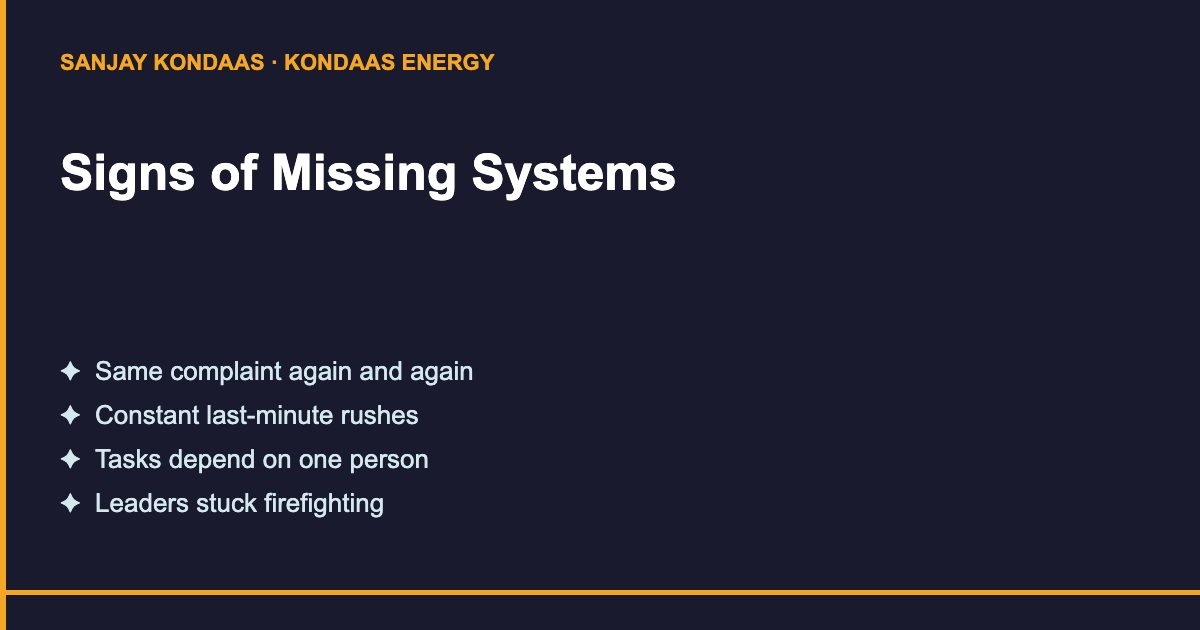
Every business has occasional surprises. Chaos is different: it is the same fire breaking out again and again. Common signs include repeated customer complaints about the same issue, constant last-minute rushes, tasks that depend on one person remembering them and leaders who spend most of their day solving problems their teams could handle. When you see these patterns, chaos is a missing system.
6 Proven Steps to Replace Chaos With Systems
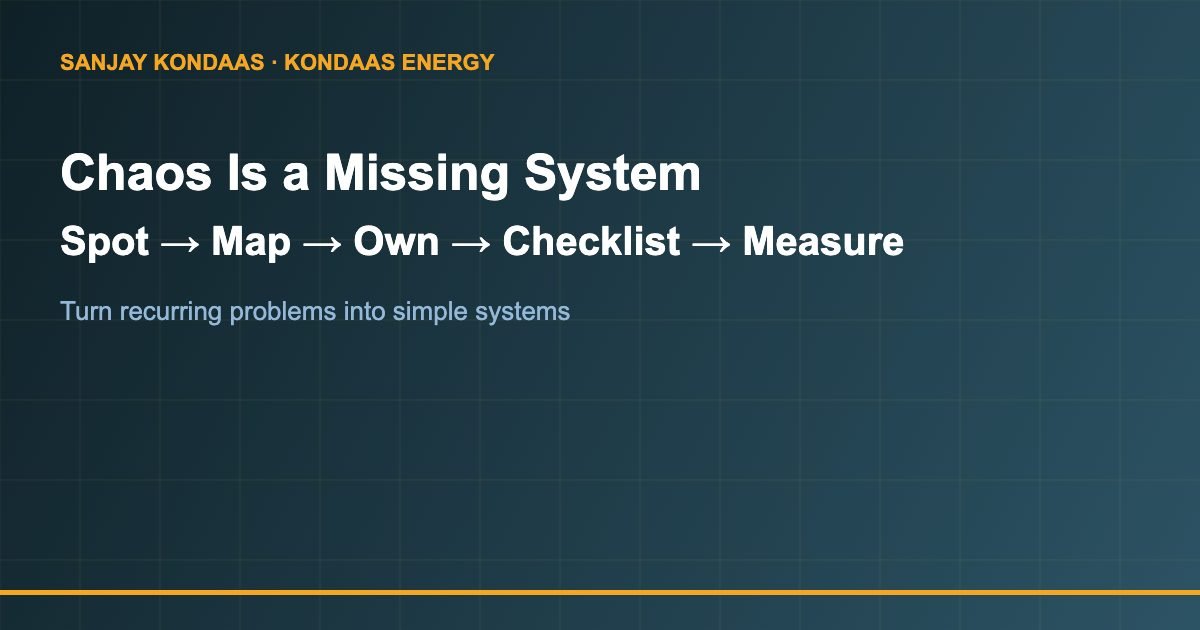
Step 1: List the Problems That Keep Repeating
Start by writing down issues that have happened more than once in the last month. Recurring problems are the best clues to where a system is missing.
Step 2: Map How the Work Actually Happens
For each problem, trace the steps from start to finish. Who does what, in what order and with what information? Gaps and handoff failures usually become obvious once the flow is written down.
Step 3: Give Every Step an Owner
A system without owners is just a document. Assign a clear owner for each stage so that nothing falls between teams.
Step 4: Create Simple Checklists
Short, practical checklists capture what “done well” looks like. In a solar business, for example, site-survey, installation and handover checklists help teams deliver consistent quality on every rooftop.
Step 5: Measure a Few Key Signals
Choose two or three measures that show whether the system is working — such as response time, rework or customer feedback. Measurement turns opinions into facts.
Step 6: Review and Improve Regularly
Systems should evolve. Review them regularly, remove steps that add no value and add safeguards where new problems appear. Over time, the business runs more smoothly with less effort.
Sanjay Kondaas on Systems and Scale
Sanjay Kondaas started his business in Coimbatore in 1995 with ₹10,000 and has grown the Kondaas group — including Kondaas Automation, Kondaas Services, Kondaas Electronics, K Powers and the Kondaas Learning and Research Center — over three decades. Growing to more than 200 people across Tamil Nadu and Kerala would not be possible if every decision depended on the founder. Treating chaos as a missing system is what allows a growing business to stay calm and consistent.
- Fewer repeated mistakes because lessons become procedures.
- Faster onboarding because new staff can follow clear steps.
- More time for leaders to focus on strategy and customers.
The idea echoes the continuous-improvement thinking behind quality standards such as ISO 9001. For related reading, see process-oriented leadership and the Kondaas business model.
FAQs: Chaos Is a Missing System
What does “chaos is a missing system” mean? It means that recurring confusion or problems usually point to a missing or unclear process, not to a lack of effort.
How do I start building systems in a small business? List repeating problems, map the work, assign owners and create short checklists.
Do systems make a business rigid? Not if they are reviewed regularly. Good systems free people to focus on customers and improvement.
2 thoughts on “Chaos is a Missing System: Sanjay Kondaas’ Blueprint for Scalable Success”