On-site problem solving is one of the most underrated leadership skills. Even after 30 years in business, time spent on the job site reveals problems — and solutions — that never appear in a report.
Table of Contents

Introduction
Success in any sector is achieved through expertise, commitment, and a desire to remain involved in the workon the ground. Boardroom decisions are not the only factors that contribute to success. Many executives decide to step away from day-to-day operations after 30 years in business. Nonetheless, some people think that the secret to preserving quality, fostering trust, and promoting ongoing development is to be actively involved on the job site.
This blog will discuss the reasons why seasoned corporate executives continue to work hard on the job site, the importance of hands-on leadership for company success, and the important lessons discovered over three decades of real-world experience. Whether you’re a project manager, entrepreneur, or future leader, these ideas will motivate you to set a good example and create more cohesive teams.
Why Active Leadership Is Still Important
Giving directions is only one aspect of leadership; other aspects include comprehending the task at hand, assisting your team, and working together to solve issues. Here are some reasons why remaining active on the job site still has an impact.
Develops Employee Trust:
Employees feel appreciated, driven, and respected when leaders collaboratewith their teams. Stronger bonds and a great working culture result from this.
Enhances the Quality of Work
Leaders may detect possible problems early, guarantee that quality standards are fulfilled, and maintain consistency throughout every project by being present on-site.
Improves the Ability to Solve Problems
Leaders who are involved in real time are better able to comprehend operational difficulties and make well-informed decisions that increase productivity.
Increases Client Confidence:
Clients value having seasoned executives actively participate in their projects. It exhibits dedication, responsibility, and professionalism.
Thirty Years on the Job Site: Lessons Learned
No classroom or business book can perfectly duplicate the skills learned over decades of experience. The best teacher is experience.
Every project offers fresh difficulties, technological advancements, and educational possibilities. Businesses remain flexible and competitive through ongoing learning.
Being a leader means setting an example. Leaders who show their dedication by deeds rather than words are more likely to be followed by their staff.
Collaborating with your team encourages responsibility and commitment.
Little Things Have a Big Impact
Frequent site engagement aids in spotting small problems before they become expensive ones. Both project quality and client happiness are enhanced by attention to detail.
Each Member of the Team Is Important
Collaboration is the foundation of successful undertakings. Respecting each worker’s contribution fosters a cooperative workplace where everyone strives for the same objective.
Advantages of Maintaining Activity on the Job Site
There are numerous long-term business benefits to staying involved in day-to-day operations.
Improved Interaction Coordination between managers, technicians, and clients is enhanced by in-person contact.Project delays and misconceptions are reduced when there is open communication.
Quicker Decision-Making:
Being present allows for quick reactions to unforeseen difficulties, cutting down on downtime and boosting output.
Increased Safety Requirements:
By ensuring that safety protocols are constantly followed, leaders may minimize workplace hazards and protect employees.
Improved Customer Connections:

When clients witness seasoned experts directly supervising project performance, they become more confident.
By fostering trust, guaranteeing quality control, and proving that each employee’s work is appreciated, effective job site visits leadership closes the gap between management and the field.
Gaining proficiency in on-site problem solving enables project managers to deal with unforeseen problems right there on the job site, avoiding small delays from becoming expensive project overruns.
Why Real-World Experience Is Always in Style
Although technology is constantly changing, practical knowledge is still extremely valuable.
Recognizing Real-World Difficulties
Practical experience offers insights that aren’t always available through meetings or reports.
Adjusting to Shifts in the Industry
To improve project outcomes, seasoned executives blend conventional wisdom with cutting-edge technologies.
Constant Improvement
Every project that is finished provides a chance to improve customer service, increase efficiency, and streamline procedures.
Construction management field experience guarantees that project managers comprehend the difficulties encountered on actual job sites, which enables them to address issues more quickly, interact with crews more effectively, and maintain construction schedules.
Crucial Characteristics of an Active Leader
Effective leaders have a number of key traits in common.
Dedication
At every level of a project, committed leaders stay involved.
Being humble
On the job site, great leaders never think they are beyond learning and contributing.
Responsibility
Taking accountability for project results fosters customer and employee trust.
Flexibility
Leaders must adopt new tools, technology, and working practices in response to shifting market needs.
Why Passion and Experience Lead to Long-Term Success
Thirty years of experience show that ethics, consistency, and a desire to stay active are the cornerstones of effective leadership. Business leaders build companies that prosper in shifting markets and changing customer expectations by keeping involved in the work, helping staff, and always learning new things.
Success is about staying dedicated to greatness at every stage, not about taking a break from the task.
Conclusion
Even after thirty years, one of the most fulfilling aspects of leadership is still getting my hands dirty on the job site. Maintaining an active role has improved relationships, enhanced project quality, increased customer trust, and reaffirmed the significance of setting a good example. Experience boosts confidence, but ongoing education and practical experience keep companies creative and competitive.
Whether you are in charge of a startup, manufacturing company, construction company, or service organization, keep in mind that effective leadership starts with direct knowledge of the task. You create not only great projects but also a long- lasting legacy of excellence, growth, and trust by staying engaged with your team and dedicated to quality.
After thirty years, going to job sites is more than simply a habit for me; it’s a dedication to my team, quality, and trust. It improves my decision- making, bridges the gap between written plans and actual implementation, and demonstrates to the staff that their job matters. Get out of the office and into the field if you want to know the real pulse of your company. The true magic takes place there.
Frequently Asked Question
1. Why is hands-on leadership important?
Hands-on leadership improves communication, strengthens teamwork, ensures quality, and helps leaders solve problems more effectively.
2. How does working on the job site benefit business leaders?
Regular job site involvement provides real-time insights, improves decision-making, enhances safety, and builds stronger relationships with employees and customers.
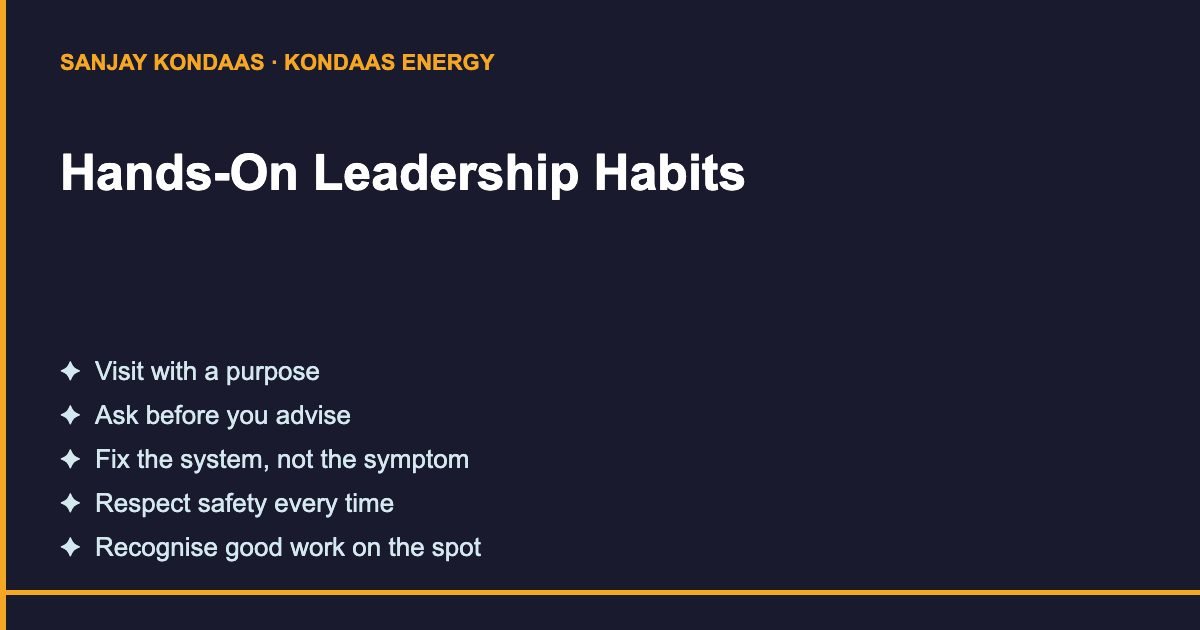
6 Habits of Hands-On Leadership That Work
Being present on site is valuable only when it helps the team rather than slowing it down. These six habits make on-site problem solving effective without turning into micromanagement.
1. Visit With a Purpose
Go to a site with a clear question in mind: Is the new checklist working? Why did this job run late? A purpose keeps the visit focused and shows the team you are there to learn, not to inspect for its own sake.
2. Ask Before You Advise
The people doing the work usually know what is going wrong. Ask them first. Good on-site problem solving starts with listening to technicians and supervisors, then deciding together on the fix.
3. Fix the System, Not Just the Symptom
Solving a problem once on site is useful. Making sure it never happens again is better. After each visit, update the checklist, training or process so the lesson reaches every team, not just the one you met.
4. Respect Safety Every Time
Leaders set the tone for safety. Wearing the right protective equipment, following site rules and stopping unsafe work immediately sends a stronger message than any policy document.
5. Recognise Good Work on the Spot
Site visits are a chance to notice and thank people for careful, quality work. Specific, timely recognition builds morale and shows what “good” looks like.
6. Share What You Learn
Bring site insights back to the office. Sales, design and planning teams make better decisions when they understand the real conditions installers face.
Why On-Site Problem Solving Still Matters in a Digital Age
Dashboards, photos and reports are useful, but they cannot show everything. Roof conditions, cable routing, customer concerns and team dynamics are often clearest in person. Hands-on leadership complements digital tools rather than replacing them.
- Faster decisions: problems are solved where they happen.
- Higher quality: small issues are caught before they become costly.
- Stronger trust: teams see leaders who understand their work.
- Better customer confidence: clients value visible leadership on their projects.
Workplace safety guidance from bodies such as the International Labour Organization also emphasises visible leadership commitment. For related stories, read from UPS repairs to rooftop solar and chaos is a missing system.
FAQs on On-Site Problem Solving
What is on-site problem solving? It is the practice of identifying and fixing issues directly at the job site, working with the people doing the work.
Doesn’t hands-on leadership lead to micromanagement? Not when visits have a clear purpose, leaders listen first and fixes are built into systems for the whole team.
How often should leaders visit job sites? Regularly enough to stay connected with real conditions — the right frequency depends on the size of the business and the number of active projects.
One thought on “After 30 Years, Here’s Why I Still Get My Hands Dirty on the Job Site”